
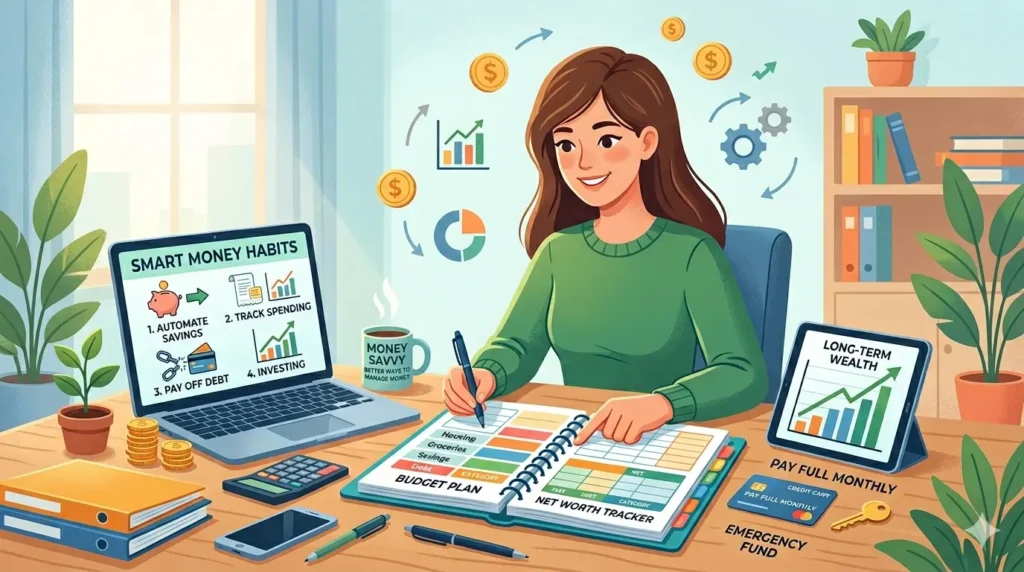
Smart money habits can prevent costly mistakes over time. Money mistakes can feel small at first. Then they grow into bigger problems. Missed payments turn into late fees. High-interest balances keep growing. Impulse purchases delay important goals.
Many people in the US deal with these issues every day. Rising living costs, credit card debt, and financial stress make it harder to stay in control. The good news is that smart money habits can help you avoid expensive mistakes before they happen.
You do not need to be wealthy to manage money well. You only need better habits and consistent choices. Small changes often make the biggest difference over time.
Do You Really Know Where Your Money Goes?
One of the most common financial mistakes is spending without tracking expenses. Many people underestimate how much they spend on food delivery, subscriptions, and small daily purchases.
Have you ever checked your account balance and wondered where your paycheck went?
Start by reviewing your bank and credit card statements each month. Look for patterns. Notice where your money disappears.
You can use a budgeting app, a spreadsheet, or a simple notebook. The method does not matter as much as consistency.
When you track your spending, you gain control. You can spot waste early and make better decisions before problems grow.
Why an Emergency Fund Matters More Than You Think
Unexpected expenses happen to everyone. Car repairs, medical bills, or job loss can quickly create financial pressure.
Without savings, many people rely on credit cards or loans. That often leads to long-term debt.
What happens if a surprise expense shows up next week?
An emergency fund helps you avoid that cycle. Even a small amount can reduce stress.
Start with a realistic goal. Save $500 first. Then work toward one month of expenses. Over time, try to build three to six months of living costs.
Set up automatic transfers into a savings account. Small deposits add up faster than most people expect.
More Income Should Not Mean More Financial Stress
Many people spend more every time they earn more. A raise turns into a new car payment, expensive vacations, or higher monthly bills.
This habit can keep people stuck financially even when income increases.
Have you noticed how easy it is for expenses to grow with income?
Instead, use extra income wisely. Save part of it. Invest part of it. Pay down debt. Leave room for enjoyment, but avoid turning every raise into new expenses.
Living below your means creates financial flexibility. It also protects you during difficult times.
Credit Cards Can Help or Hurt You
Credit cards can be useful tools. They can also become expensive traps.
High interest rates make it easy for balances to grow quickly. Minimum payments may seem manageable, but they often keep people in debt for years.
Many people ask themselves the same question later. “How did this balance get so high?”
Try to pay your balance in full each month. If you already carry debt, focus on paying off high-interest balances first. Learn more about how to pay off credit card debt faster.
Avoid using credit cards for purchases you cannot afford. Rewards points are not worth long-term debt.
It also helps to review your statements regularly. Fraud charges and billing errors happen more often than people realize.
A Simple Budget Works Better Than a Perfect One
Many budgets fail because they are too strict. People try to cut every enjoyable expense at once. That usually leads to frustration.
A better approach is to build a realistic budget.
Does your budget actually fit your lifestyle?
Separate your expenses into categories:
- Needs
- Savings
- Debt payments
- Wants
Give yourself some flexibility. A budget should support your life, not make you miserable.
The key is consistency. A simple budgeting rule you follow is better than a perfect budget you abandon after two weeks.
Pay Yourself First, Not Last
Many people save whatever money is left at the end of the month. Often, nothing remains.
Instead, treat savings like a monthly bill.
What would happen if saving became automatic instead of optional?
Move money into savings as soon as you get paid. Automating this process makes it easier. You remove the temptation to spend first.
This habit builds financial security over time. It also helps you prepare for future goals like buying a home, starting a business, or retiring comfortably.
Pause Before Big Purchases
Impulse spending causes many financial regrets. Emotional shopping often feels good in the moment, but it can create stress later.
Before making a large purchase, pause for at least 24 hours. For bigger expenses, wait several days.
Ask yourself:
- Do I truly need this?
- Will I still want it next month?
- Can I afford it without using debt?
- Does this purchase support my goals?
Taking time to think reduces emotional decisions and prevents buyer’s remorse.
The Earlier You Invest, the Better
Many people delay investing because they think they need a large amount of money first. That is not true.
Starting early matters more than starting big.
Have you ever thought about how much time can help your money grow?
Consistent investing with limited savings allows compound growth to work over time. Even small monthly contributions can grow significantly over the years.
If your employer offers a retirement plan with matching contributions, try to take full advantage of it. Otherwise, you may leave free money behind.
Long-term investing works best when you stay patient and consistent.
Small Financial Knowledge Can Save You Thousands
Financial education helps people avoid costly mistakes. Unfortunately, many adults never learned money management in school.
Take time to understand:
- Credit scores
- Interest rates
- Retirement accounts
- Taxes
- Insurance
- Investing basics
You do not need to become a financial expert overnight. Small improvements in knowledge can lead to better decisions for years.
Reliable financial books, podcasts, and trusted online resources can help you build confidence.
Stop Comparing Your Financial Life to Everyone Else’s
Social media creates pressure to spend. People often compare their real finances to someone else’s highlight reel.
Expensive cars, luxury vacations, and designer items do not always reflect financial stability. Many people live beyond their means to maintain appearances.
Is impressing other people worth long-term financial stress?
Focus on your own goals instead.
Financial success looks different for everyone. For some people, it means becoming debt-free. For others, it means saving for retirement or creating more freedom.
Comparison often leads to unnecessary spending and financial stress.
Your Money Habits Shape Your Future
Smart money habits require regular attention.
Check your accounts weekly or monthly. Review your budget, savings progress, and debt balances.
Small financial problems are easier to fix early. Ignoring them usually makes them worse.
Life changes quickly. Your financial plan should adjust when needed.
Regular check-ins help you catch problems early. They also help you stay motivated as you make progress.
The Small Choices You Make Today Matter Later
Smart money habits are not about perfection. They are about making better decisions consistently.
Most costly financial mistakes do not happen overnight. They develop through small habits repeated over time. The same is true for financial success.
Tracking spending, saving regularly, avoiding unnecessary debt, and thinking carefully before spending can protect your future. These habits may seem simple, but they create lasting results.
The earlier you build strong money habits, the easier it becomes to avoid financial stress and create long-term stability.